

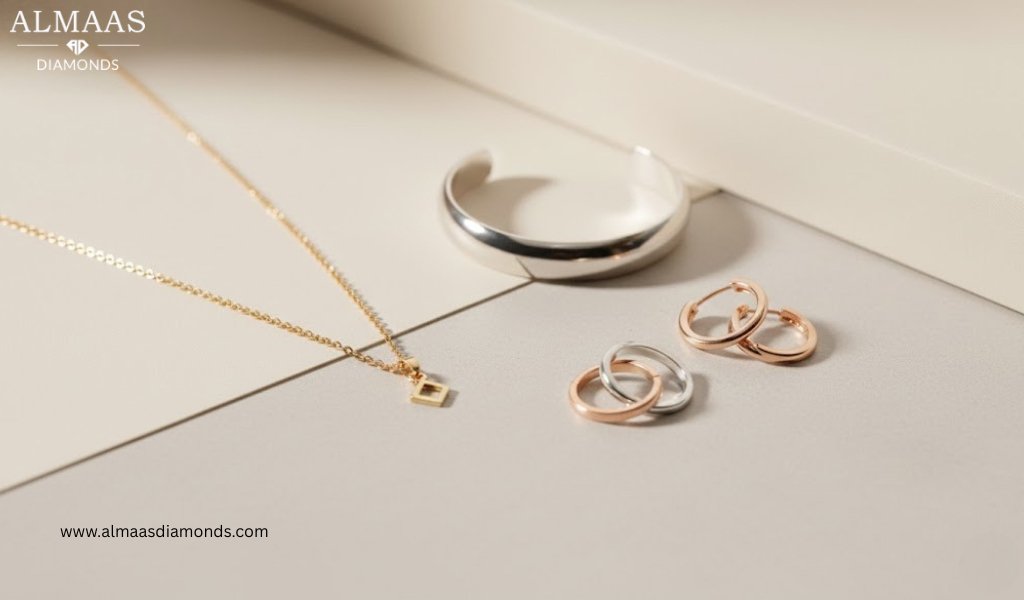

So, do you appreciate fine detail? Mixing metals jewellery generates refined contrast along with smooth harmony. This style celebrates individuality. It supports personal expression. That, too, while keeping a luxurious aesthetic that works across seasons. When metals blend correctly, they deliver balance and depth. They create an instantly modern edge that elevates daily wear.
The Mixing Metals Jewellery trend has grown because modern styling places emphasis on versatility. Jewellery no longer sits in one rigid category. People now build wardrobes that change across occasions. Pairing silvery brilliance with warm tones enriches textures. This creates layers that feel contemporary. The goal here is not to match. The goal is to complement.
Those embracing the trend also enjoy flexibility. Fine jewellery that mixes tones transitions from daywear to evening wear without compromise. It allows curated collections to stretch further. Buyers no longer need duplicate styles in separate colours. Instead, they can blend metals that bring refined definition.
What Metals Layer Best for Rings, Necklaces, and Bracelets?
Warm gold complements sterling silver exceptionally well. Rose gold sits in the middle and softens the contrast. That is why many jewellery experts place rose gold between silver and yellow gold. It creates subtle bridges within stacked sets. Layering polished silver bracelets with brushed gold enhances dimension. The effect highlights craftsmanship. This is especially true when pieces have structured lines.
For necklaces, a mixed metal necklace draws attention to the neckline. It also elongates the frame. Experts suggest combining one fine chain with one sculpted chain. Then add one feature piece. Silver chains work beautifully beneath gold lockets. That balance creates a focal point that looks intentional.
Rings benefit most when textures vary. Stacking hammered silver rings with slim gold bands produces contrast that feels curated rather than accidental. When people incorporate rose elements, the entire composition takes a refined shift.
Bracelets follow similar rules. Design experts often advise pairing minimal silver bangles with engraved gold cuffs. The shape difference gives breathing space and keeps the eye engaged.
How to Choose Stackable Rings and Bracelets?
Choosing stackable items requires structure and layering logic. Buyers must look at scale, spacing and tonal distribution. Selecting sets becomes smoother when the approach follows consistent steps.
1- Start With a Base Shade
Select a primary metal tone. That foundation sets visual flow. People often start with yellow gold because it anchors colour strongly. Others prefer silver because it simplifies contrast. Once the base shade is fixed, other tones sit around it smoothly.
2- Add Texture Variation
Smooth bands add to the elegance. Whereas engraved bands bring out the craft’s value. Hammered styles further diversify the stack. The change in surface reflection helps each component breathe.
3- Introduce Width Gradually
Thicker rings should sit at the centre of a stack. Slim rings sit beside them. This avoids weight imbalance and prevents overcrowding.
4- Consider Statement Pieces
Small diamond trims, fine beading or discreet shapes enhance stacks. A mixed metal necklace also supports the stack on a visual level. When bracelets follow similar detailing, the entire look becomes cohesive.
5- Balance Tone Placement
Place silver elements where visual brightness is needed. Gold warms the composition. Rose tones soften edges. When positioned with intent, the stack looks aligned.
Below is a short summary of fitting combinations:
|
|
|
|
|
|
|
|
|
|
|
|
|
|
|
|
|
|
|
|
Adding Gemstones and Pearls to Mixed Metal Looks
Fine detailing enhances metals. Gemstones transform contrast into depth. Pearls soften intensity and provide natural refinement.
1- Select Gemstones That Reflect Light
Diamonds bring radiance. Their clarity sits perfectly beside gold and silver. Sapphires deepen the aesthetic while maintaining elegance. Emeralds add statement value. Their richness works best within bold bands.
2- Integrate Pearls with Structured Shapes
Pearls glow gently, which smooths transitions between silver and gold. They fit well into drop earrings, clustered studs, and pendant designs. When set in silver, pearls look clean. When set in gold, they look warm & elevated.
3- Pair Stone Colours with Metal Temperature
Cool stone tones thrive with silver. Warm gemstone tones flourish with gold. Rose settings adapt to both and operate as midpoint tones. This ensures pieces remain versatile.
Mixed metal earrings carry gemstones exceptionally well. When gold holds the primary setting, silver detailing frames it without overpowering it. This structure ensures eye direction moves across the composition, not away from it.
Bottom line
Mixing metals jewellery combinations rewards thoughtful styling. Buyers gain versatility and a polished identity when they experiment responsibly. The finished outcome looks cohesive and highly relevant to contemporary taste.
FAQ's Related to Mixing Metals Jewellery
1- Which metals work best for daily wear when stacking?
Most experts recommend a base of silver or gold because they resist fading. People can add rose accents to ease transition. This forms stacks that look unified.
2- How do gemstones influence contrast?
Gemstones bring depth and directional focus. Diamonds amplify light. Coloured stones add centre definition. Their presence smooths alternating tones and boosts refinement.
3- What makes mixed metal styling feel intentional?
Balance in structure. Controlled spacing. Consistent tonal anchors. Once these elements align, each layer reads polished, not random. The resulting mixing metals jewellery feels innovative and stylish.