

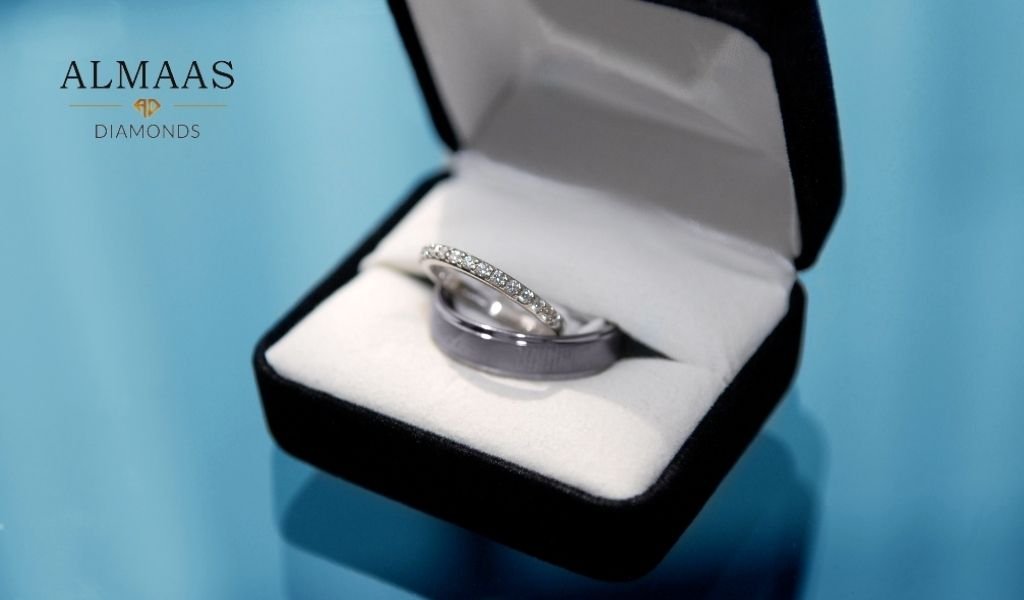

When buyers compare shaped wedding bands vs straight bands, they often seek comfort. They opt for balance and a design that feels right every day. Therefore, understanding how each style performs helps turn emotion into confidence. And that naturally leads you into a closer look at their differences.
Wedding bands do more than complete an engagement ring. They influence wearability. They define long-term comfort. They also shape how a ring stack looks on your finger and feels over time. Because of this, the decision deserves clarity and thoughtful comparison.
Shaped Wedding Bands vs Straight Wedding Bands: Key Differences
1- Fit with Engagement Rings
Straight wedding bands sit in a clean, horizontal line. They work well with higher-set engagement rings. However, gaps often appear when paired with low or uniquely shaped settings.In contrast, shaped bands follow the outline of the engagement ring. They sit closer. They reduce space. This close alignment protects both rings from friction and uneven wear.
2- Comfort and Everyday Practicality
Comfort matters for daily wear. Straight bands feel familiar as well as even around the finger. Yet shaped bands offer a tailored fit. They contour around existing settings. As a result, they reduce pressure points and unwanted movement. Buyers who wear their rings daily often notice this difference quickly.3- Visual Harmony
Straight bands create a minimal look. They suit classic tastes. However, shaped bands enhance balance. They frame the centre stone rather than competing with it for brilliance. This design approach suits halo rings and detailed settings. Women's shaped wedding rings often appeal to buyers who value symmetry and refined detail.4- Styling Flexibility
Straight bands are a breeze to stack with eternity rings or anniversary bands. They allow future additions without adjustment. Shaped bands require more planning. They do, however, offer a custom look that is hard to beat. Jewellers design them to complement a specific engagement ring, which creates a seamless and intentional look.5- Longevity and Wear
Durability is closely tied to how well a ring fits. When straight bands have gaps, they can rub against engagement rings, leading to wear over time. Shaped bands limit movement. They protect settings as well as stones. Therefore, buyers focused on long-term durability often lean towards shaped designs.Popular Styles of Shaped Wedding Bands
Women’s shaped wedding rings offer variety. And it does so without compromising function. Each style suits a different engagement ring and personal preference. The following designs reflect current industry standards and buyer demand.
1- Contoured Wedding Bands
The contoured bands are rounded to reflect the profile of the engagement ring. They suit round and oval stones. They maintain elegance while ensuring a close fit. This style remains a reliable choice for classic designs.2- Curved Bands
A curved and V-shaped band creates a soft sweep around the centre stone. This enhances visual flow. It works well with low-set rings and ornate designs. Buyers often choose this style for its graceful outline.3- V-Shaped Wedding Bands
V-shaped bands form a pointed centre that pulls the eye upward. They elongate the finger and suit modern aesthetics. This design also stands confidently on its own, which adds versatility.4- Wishbone and Chevron Styles
The wishbone ring features a gentle dip at the centre. It symbolises unity & direction. It pairs well with solitaires and halo settings. Buyers appreciate both its meaning and its flattering shape.5- Diamond-Set Shaped Bands
Diamond-set shaped bands include pavé or channel-set stones. These designs add brilliance without overpowering the engagement ring. They suit buyers who want subtle luxury with lasting appeal.Before moving ahead, here is a quick overview.
|
|
|
|
|
|
|
|
|
|
|
|
|
|
|
|
|
|
|
|
|
|
|
|
|
Straight Wedding Bands: When Simplicity Leads
Straight wedding bands remain timeless. They offer clean lines and quiet confidence. They suit buyers who value tradition and versatility. Many prefer them for their simplicity and ease of stacking.
Straight bands are also adaptable to changes in life. They allow future ring additions. They suit evolving tastes. Buyers who plan to add anniversary bands often begin with a straight design for flexibility.
Metal choice plays a key role here. Straight bands showcase metal finishes clearly. Gold, platinum and alternative metals all stand out without interruption. This clarity appeals to those who prefer understated elegance.
Do not miss: Everything You Need To Know Before Buying Platinum Wedding Bands
Choosing What Suits You the Best!
The right choice depends on lifestyle. Even your engagement ring style and personal taste matter here. Do you have detailed engagement rings? If yes, you would benefit from shaped bands. Does your ring feature minimalist designs? In that case, you might want to prefer straight bands.
Remember, comfort should guide the decision. Likewise, visual harmony should support it.
Also, trying both styles helps clarify preference. Seeing how each band sits beside the engagement ring reveals critical differences. A shaped band may feel surprisingly natural. A straight band may feel reassuring as well as familiar.
A wishbone ring will be appropriate for customers who prefer symbolism and soft curves. Straight bands are preferred by people who are concerned about simplicity and flexibility. Each of the two styles is timeless, provided they are selected intelligently.
On an Ending Note
Soft light, a gentle sparkle and the quiet closeness of shared moments often define Valentine’s Day. Choosing a wedding band carries that same feeling of intention and warmth. You can choose shaped wedding bands vs straight bands. Either way, the right band supports comfort. It creates harmony and lasting meaning.
When you understand fit and lifestyle needs, you choose with confidence. So, what is stopping you? Now is the perfect time to explore both styles. Go ahead and select a band that feels right today and every day ahead.