

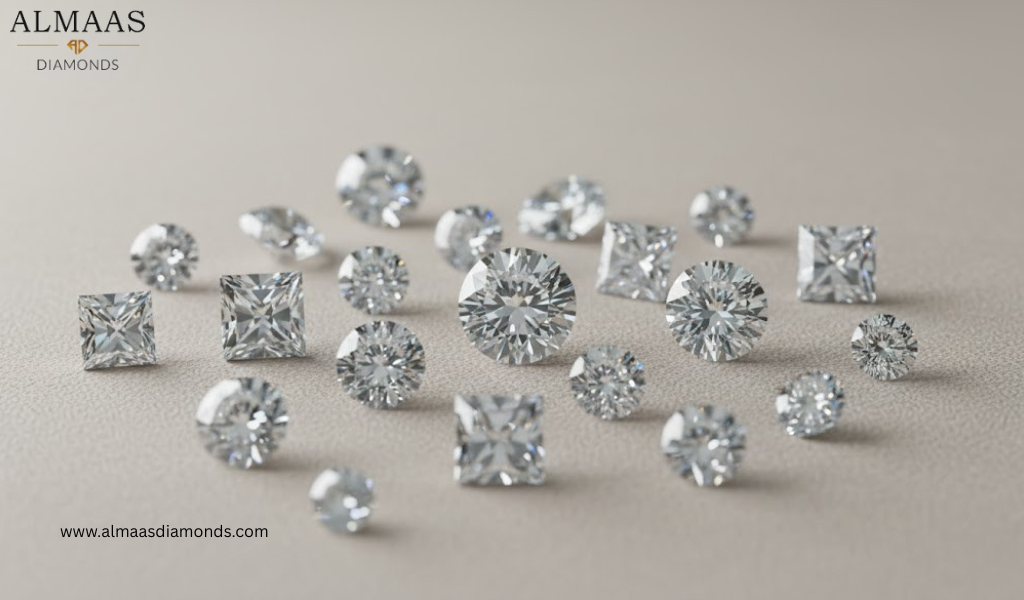

Consumers are increasingly aware of diamond quality frameworks. They often compare the well-known diamond 4Cs lab-grown with traditional grading systems. Some also question IGI vs GIA lab diamonds. And that becomes relevant when certification influences trust.
Understanding the truth behind lab-grown diamonds removes confusion. It supports ideal appreciation of their attributes.
Understanding Lab Diamond Quality and Grading in London
1- Quality evaluation is at the peak. Lab grown diamonds undergo the same grading standards applied to mined stones. Reputable laboratories use precise assessment techniques. Buyers often refer to the diamond 4Cs: cut, colour, clarity and carat weight. These remain uncompromised for lab-grown stones. Laboratories deliver reports that define value clearly.
Many buyers internationally still compare IGI vs GIA Lab Diamonds to understand subtle differences. The focus should remain on how the diamond performs visually and structurally.
2- Laboratories evaluate cut accuracy. They confirm the light’s return. They check symmetry and polish. Lab-grown stones often achieve high grades because their formation environment remains controlled. This controlled environment helps maintain clarity’s consistency. Even though inclusions still occur naturally, many appear minimal and unobtrusive.
Clarity grading assesses internal and external features. Colour grading confirms the absence of tint. Buyers appreciate how consistent grading ensures predictable quality. High classification standards keep the industry in line with strict assessment principles.
Comparing Lab-Grown Diamonds vs Natural Diamonds
Buyers often seek genuine distinctions. Lab-grown diamonds hold identical crystal structures. They demonstrate identical brilliance when polished. They receive grading that mirrors mined standards.
The narrative that lab-grown stones lack authenticity does not hold factual support. Their visual and structural behaviour remains indistinguishable under normal observation.
Natural diamonds form over long geological timelines. They develop under deep-earth pressure. Lab-grown stones replicate the same conditions. Laboratory conditions simply accelerate the formation. Growth replicates a genuine diamond lattice. That lattice preserves hardness and optical performance.
Mined stones occasionally attract value for geological rarity. Lab-grown alternatives appeal to buyers who value traceability. Pricing remains favourable. Buyers therefore access larger sizes without compromising quality. The finished stone still performs beautifully. Clear light dispersion reassures buyers.
Summary table for this section
|
|
|
|
|
|
|
|
|
|
|
|
|
|
|
|
|
|
|
|
|
|
|
|
How Are Lab Diamonds Grown to Meet High Jewellery Standards?
Laboratories apply specialised procedures. The diamond grows gradually. Plus, it passes through multiple quality checkpoints. And each step influences light performance.
1- High Pressure High Temperature Formation
The HPHT environment recreates natural deep-earth pressure. The crystal begins from a seed. And that seed expands under intense controlled pressure. The stone forms layer by layer until it reaches ideal growth completion. The result is a robust diamond crystal ready for cutting.
2- Chemical Vapour Deposition Growth
CVD diamond formation uses activated carbon particles. These bond over a seed surface. The result appears highly uniform. This method often produces excellent clarity outcomes. The finished diamond remains structurally identical to naturally formed stones.
3- Quality Control During Formation
Laboratories supervise each stage. They monitor purity levels. They check growth velocity. They ensure there is no compromise in crystal integrity. This supervision aids in reducing inclusions. It also assists cutters. Because well-formed structures respond accurately to shaping techniques.
4- Performance Evaluation Before Polishing
Before the cutting phase, the raw stone undergoes technical inspection. Professionals assess its responsiveness to precision shaping. They position angles that tweak light behaviour. Brilliance depends strongly on accurate decisions during this stage. Buyers enjoy consistent light return.
Lab Diamonds Myths Evaluated
Many lab diamonds myths do not have factual foundation. Some suggest that stones grown in the lab appear visually inferior. Optical tests prove that light dispersion remains equivalent. Others claim that these stones hold reduced longevity. Well, diamond’s hardness does not alter. Even claims regarding unstable colour do not reflect accurate performance behaviour.
Certification addresses these myths clearly. Accurate documentation proves that every relevant performance attribute stays gaugeable. In fact, reliable documentation aligns with global jewellery expectations.
The comparison of IGI vs GIA lab diamonds reinforces transparency. Each laboratory defines standards precisely. Grading influences perceived value. Buyers should review certificates and focus on measurable outcomes.
Also Read: How To Choose The Perfect Gemstone Engagement Ring?
Truth About Quality Expectations
Material composition remains identical with lab-grown ones. Buyers receive a genuine diamond. It has clarity ranges. It has colour classifications. It has measurable brilliance. Craftsmanship is what determines final appearance. That means the diamond responds to polishing exactly as expected.
The industry recognises lab-grown stones legitimately. They support luxury design. They also complement contemporary fine jewellery.
Lab-grown diamond traceability supports informed purchasing. Also, it aligns with advanced manufacturing processes.
Conclusion
Lab-grown diamonds reflect genuine beauty and measurable quality. Buyers receive clear evidence of diamond 4Cs lab-grown through established grading. The myths surrounding performance do not align with structural truth. Confidence comes from verifiable evaluation.
FAQ's About Lab Diamonds
1- Do lab-grown diamonds maintain lasting brilliance?
Yes. Their crystal structure is the same as the mined diamonds. This is why brilliance remain stable yet reliable.
2- Do lab-grown stones receive proper certification?
Yes. They receive proper grading that follows the universal quality scale used for natural diamonds.
3- Are lab-grown diamonds suitable for luxury jewellery?
Yes. Their hardness and clarity support high craftsmanship. And that’s why you can see them in premium fine jewellery styling.